MANTICARTS / STUDY PATH
Yijing: from figures to texts
Connect trigrams, hexagrams, change records and layered reading of the classic.
Study sequence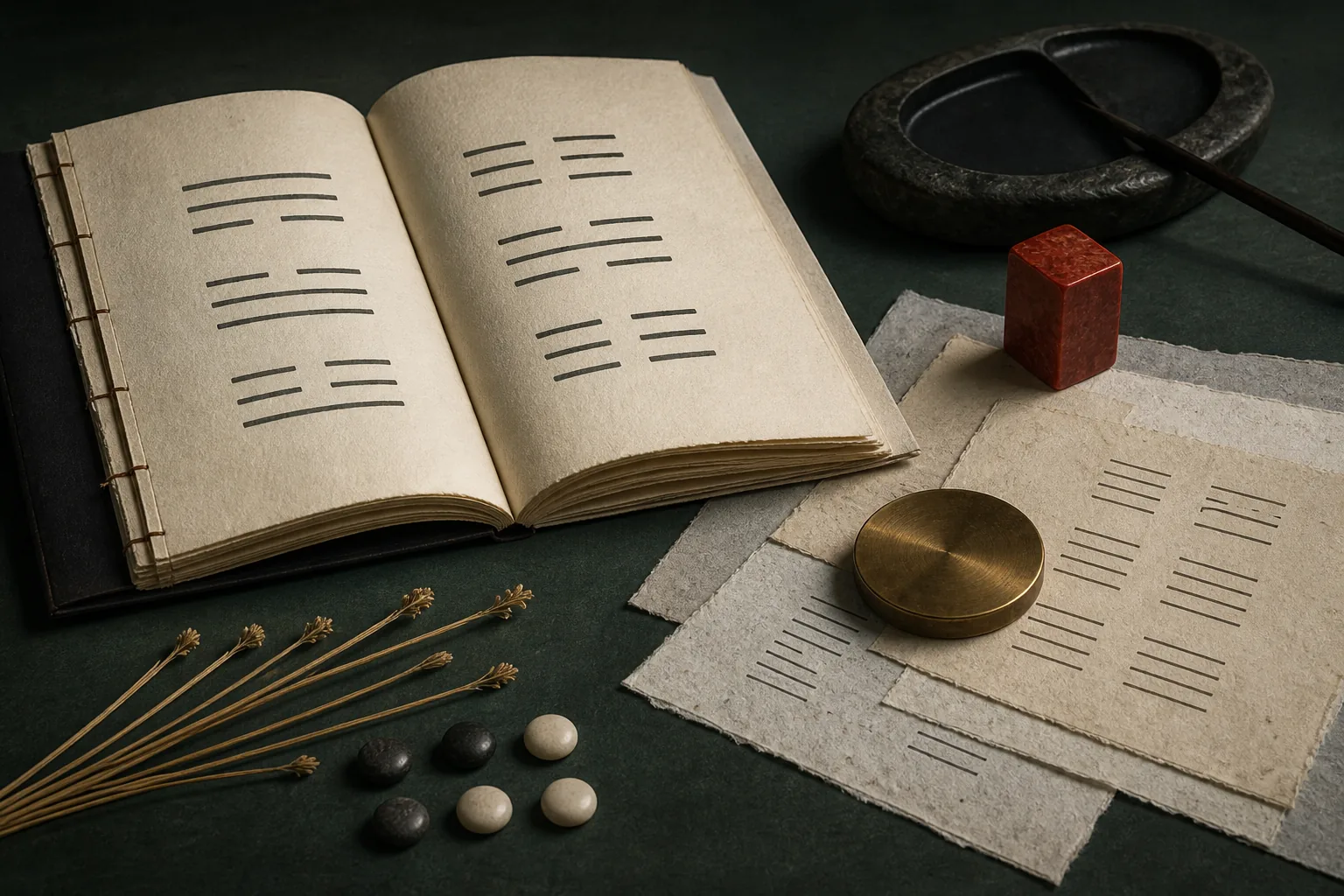
Yijing materials combine figures, sequences, text and interpretation. Structural study begins with three- and six-line figures; textual study distinguishes statements, commentaries and later annotations. The two strands support one another: diagrams clarify positions, while edition records make citations precise.
This path initially separates generation methods from structural exercises. Learn how a figure is composed and how to record one change, then compare methods for obtaining figures and changing lines. The sequence helps locate disagreement in input, operation or interpretation.
The Shifa close reading extends this work to relationships between numerical signs, diagrams and editorial interpretation. Do not automatically impose all rules of the received Zhouyi on manuscript evidence. Differences deserve documentation in their own right.
CURRICULUM
Four connected units
- 01
Trigram foundations
Fix bottom-to-top notation and identify the eight trigrams.
OUTPUTEight structure cards
- 02
Hexagrams and line positions
Combine trigrams and retain a complete single-line change trace.
OUTPUTThree change records
- 03
Image-number and interpretation
Separate an interpretation into text, mapping, inference and evaluation.
OUTPUTA four-column annotation
- 04
Bibliography and editions
Complete edition and locator details for the text actually used.
OUTPUTA traceable edition card
CAPSTONE
Bring the work together
Choose one figure and a locatable passage; assemble its structure, a change record, two interpretations and complete source details.
Portfolio methodCONNECTED DOSSIERS
Explore the specialist dossiers
蓍筮与《周易》
A method producing a six-line hexagram and changing lines with counting stalks, interpreted through line statements and later correlative reasoning; it became a canonical hub for Yijing studies and many later arts.
数字卦与先秦筮法
Excavated traditions in which numbers such as one, four, five, six, eight and nine directly formed line positions, revealing a plurality of methods before and alongside standardized yin-yang lines.
卦气、纳甲与八宫
Correlations of hexagrams and lines with months, seasonal nodes, stems, branches, phases, pitch and waxing-waning cycles; a technical substrate for Six Lines, fate calculation and some fengshui systems.
纳甲六爻
A hexagram method assigning branches, phases, six relations, host-response positions and six spirits, then reading season, day, change and strength; one of the most active Yijing divination systems today.
梅花易数
A flexible method taking hexagrams from time, numbers, sound, direction, characters or encountered images and interpreting change through body-function roles, phase relations, nuclear hexagrams and external correspondences.
《焦氏易林》
A corpus of more than four thousand rhymed oracles indexed by primary and resulting hexagrams, valuable as divination manual, poetry, folklore and Han social evidence.
Open self-study path · 2026-10-24. Exercises are editorial material; references appear in each unit. Images are thematic illustrations. Study records are separate from formal assessment and credential procedures.