
01
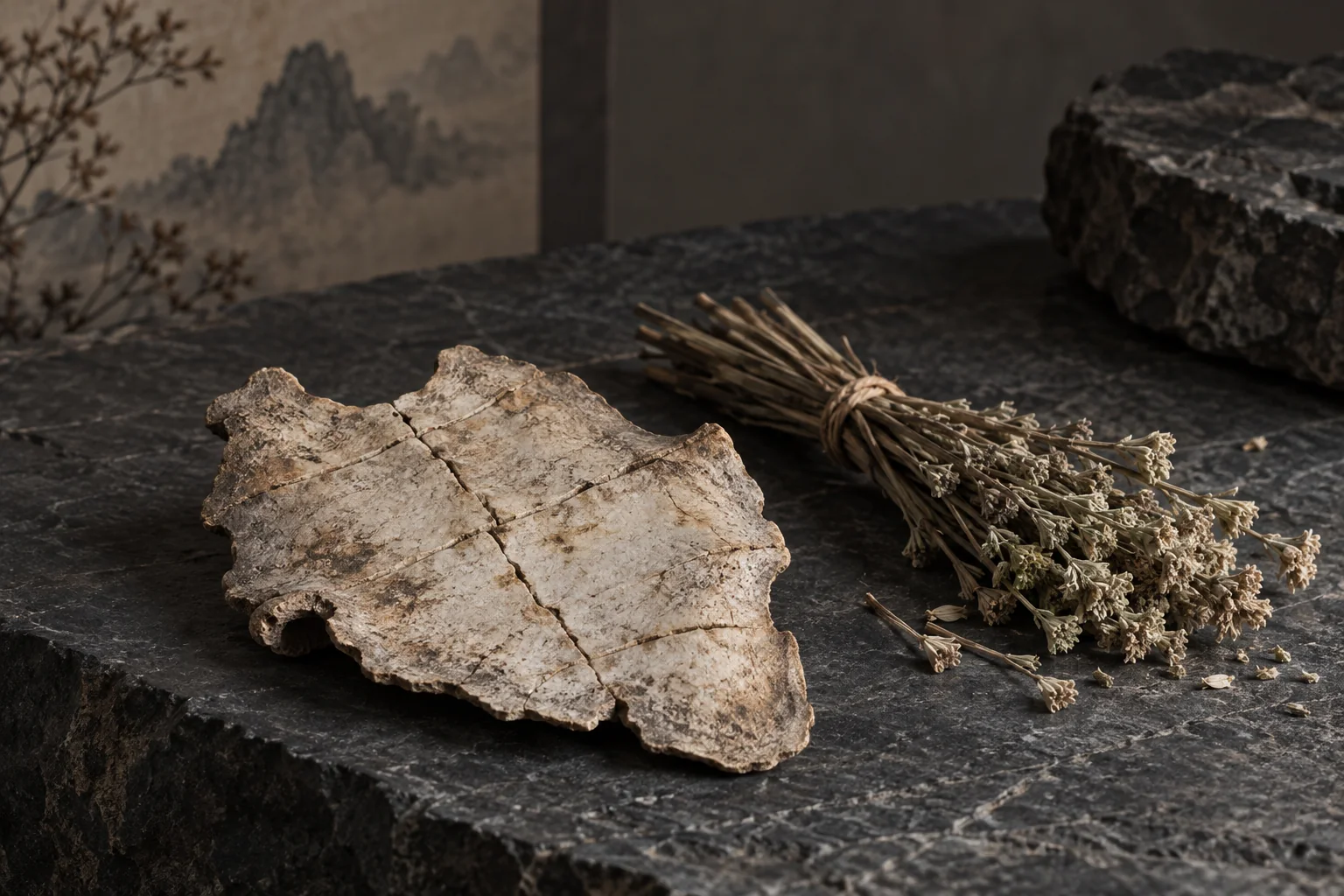
Identify the material in front of you
UNESCO's oracle-bone page offers an overview and captions identifying institutions and publication numbers for selected objects. These can locate material; graph-by-graph reading still requires plates, transcriptions and scholarship.
Keep page title, caption and visible object in separate fields. A category such as oracle-bone inscriptions is broader than an individual catalogue identifier. Record the face or orientation of each image, including uncertainty.
02
Keep four layers of records
First record visible marks, cracks, loss and layout. Then transcribe line by line, marking uncertainty. Add punctuation, interpretation and supplementation in a third layer, and your research claim in a fourth. Preserve locators between layers.
For unfamiliar graphs, attribute an editor's reading and cite it. Avoid completing a sentence from visual resemblance or modern meaning alone. Where readings differ, record their consequences for interpretation before choosing between them.
03
Build a reviewable evidence card
Choose a captioned example from the source. Record the institution, publication number and URL, then separate information explicitly supplied from information still to be checked. Leave unknown image sides, full transcriptions or dating grounds unresolved.
Form a narrow question, such as the basis for punctuation in a particular transcription. List the evidence it requires and identify what the present page does not provide. This turns a broad interest into a workable research task.
REFLECTION
Reflect on the evidence
Does a caption with an institution and number establish that you have critically edited the whole inscription?
Read the analysis
Those fields help identify the object. A critical reading also requires graph-level correspondence, editorial sources, unresolved readings and comparison of alternatives. State which parts have not been examined.
SOURCE RECORD
Source and connections
UNESCO: Chinese oracle-bone inscriptionsThe recording steps, exercises and reflection are institute-authored teaching suggestions. Material descriptions draw on the linked source; citation implies no institutional affiliation or endorsement.
Editorial study material · 2026-10-24. Illustrations are conceptual; identify objects through the cited sources.