地Mantic arts dossier · Fengshui and environmental arts
堪舆与风水
Kānyú yǔ Fēngshuǐ·Fengshui and Chinese geomantic traditions
A family of site-selection traditions combining landform, water, orientation, time, yin-yang, phases and compass layers for dwellings, settlements and burials.
- Aliases
- site divination, burial geomancy, form and compass traditions
- Formation
- Kanyu had broader Han meanings; site traditions matured from Six Dynasties through Song, with later proliferation
- Evidence status
Study notes & citation
堪舆与风水. Institute of Chinese Mantic Arts. https://www.manticarts.com/en/arts/fengshui
On this page
01Core principles
Core principles
Translate formulas into structure: what enters, how the model is arranged, and which relations drive interpretation.
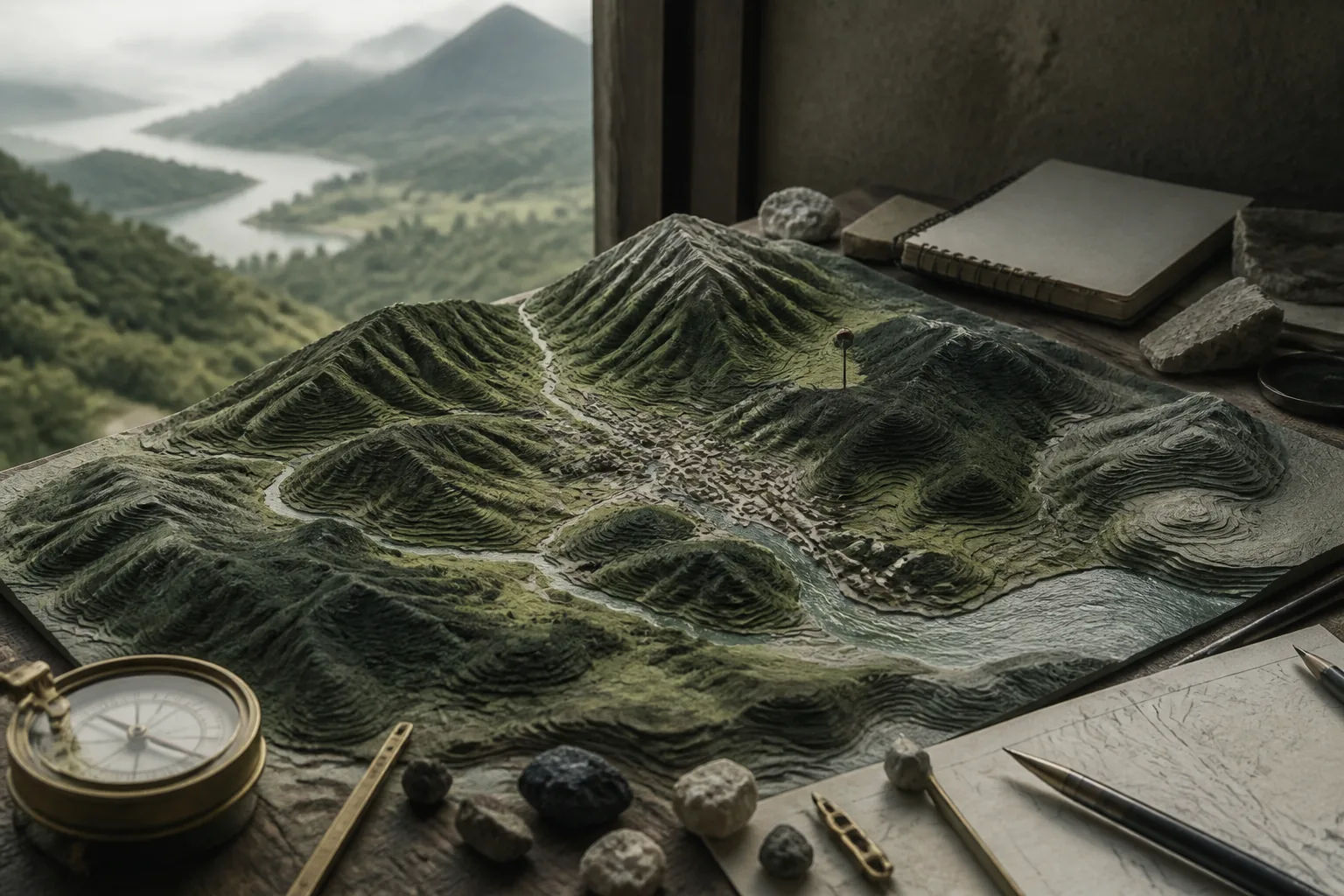
Form traditions emphasize mountain chains, nodes, protective forms and water. Compass traditions map direction, stems-branches, hexagram qi and time. Sanhe, Sanyuan-Xuankong, Flying Stars, Eight Mansions, living and burial approaches use distinct scales and rules.
Key concepts
- dragon, node, forms and water
- landform
- patterned qi
- geomantic compass
02Origins and historical development
Origins and historical development
Keep traditional accounts, surviving evidence and later transformations distinct.
Han kanyu was closely tied to calendrical selection. Residence and burial texts increased after the Six Dynasties; Dunhuang preserves site manuals. Compasses, local lineages and printing encouraged later schools from Song through Qing.
STUDY / Kānyú yǔ Fēngshuǐ
Site documentation for fengshui
- Materials and inputs
- Site plan, orientation method, terrain, time and school
Research question
Which data support physical description and which support symbolic arrangement?
Practical exercise
Use a public site for a non-invasive desk exercise. Separate orientation, terrain/water features and symbolic assignments; state errors and unmeasured data.
03Evidence limits and research debates
Evidence limits and research debates
Distinguish traditional interpretations, documented material and claims requiring testing.
Authorship and date of texts such as the Book of Burial are disputed, and schools are not uniform. Their landscape, architectural and ritual history can be studied without presenting mantic causality as modern geography.
This dossier supports historical, textual and methodological study. Internal traditional explanations are not modern empirical validation and do not replace medical, legal, financial or other professional advice.
04Core texts and materials
Core texts and materials
- 01Book of Dwellings
- 02Book of Burial
- 03Qingnang Jing
- 04Hanlong and Yilong classics
- 05Dunhuang residence and burial manuals