相Mantic arts dossier · Physiognomy and bodily observation
相人术
Xiàngrén Shù·Chinese physiognomic traditions
Historical classification and analogy based on bone structure, features, complexion, voice, movement and proportion, formerly used for character, fortune, lifespan and personnel decisions.
- Aliases
- face, bone, hand, voice, complexion and mole reading
- Formation
- Pre-imperial narratives; systematized in medieval manuals and Song-Ming print
- Evidence status
Study notes & citation
相人术. Institute of Chinese Mantic Arts. https://www.manticarts.com/en/arts/physiognomy
On this page
01Core principles
Core principles
Translate formulas into structure: what enters, how the model is arranged, and which relations drive interpretation.
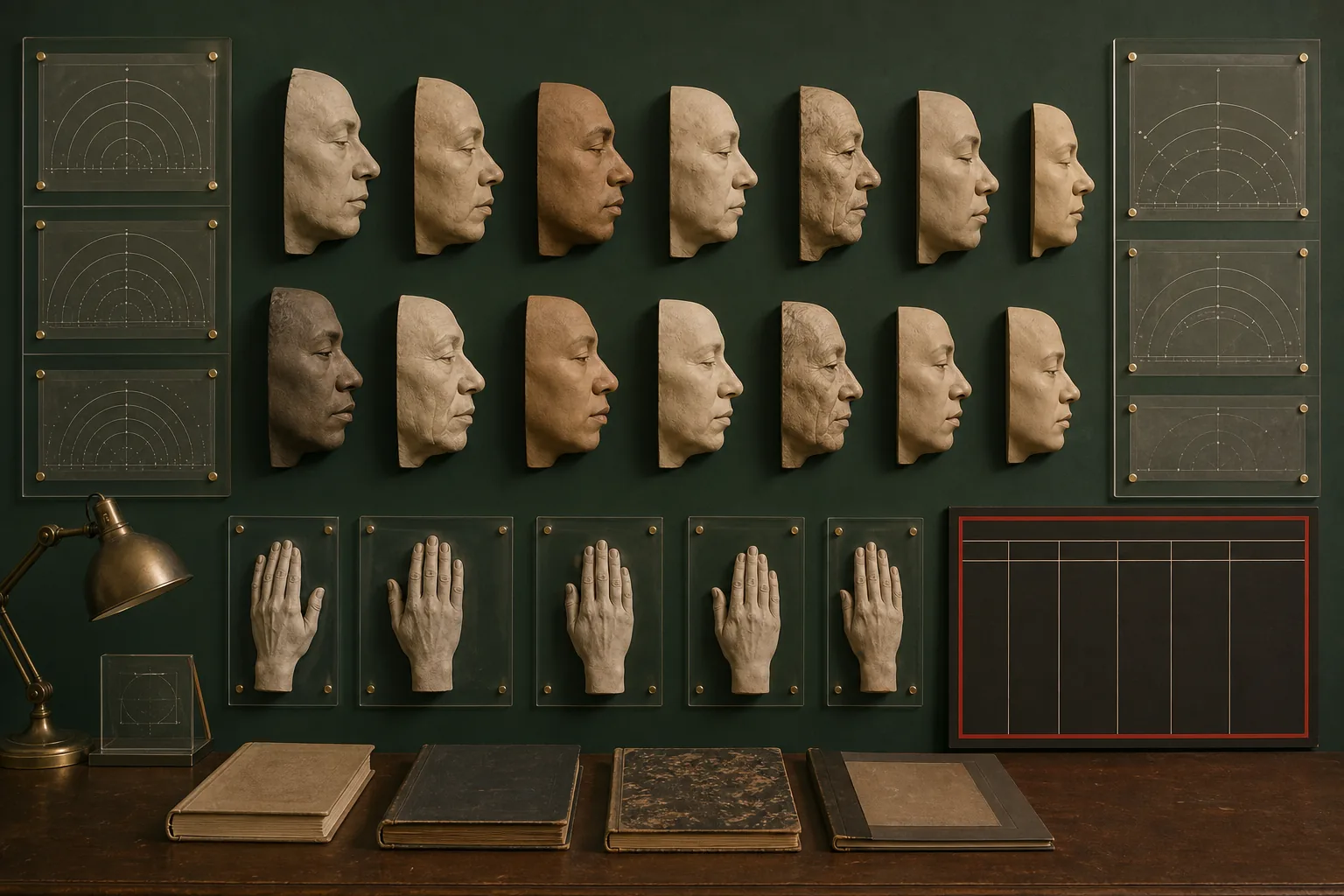
Facial zones, bones, features, twelve palaces, complexion and time are correlated through morphological analogy, phases and social types. Bone, face, hand, voice, gait and mole traditions were not always one system.
Key concepts
- five features
- bone forms
- complexion
- twelve facial palaces
02Origins and historical development
Origins and historical development
Keep traditional accounts, surviving evidence and later transformations distinct.
Pre-imperial histories contain physiognomic stories; Dunhuang fragments and Song-Ming manuals show increasingly detailed classification. Palmistry also developed or circulated across civilizations, and modern illustrated print widened its reach.
STUDY / Xiàngrén Shù
Reading physiognomic representations
- Materials and inputs
- Historical image, bodily categories, caption and context
Research question
How do classificatory terms convey values of a particular period?
Practical exercise
Analyze a published historical plate for labels, visual conventions and moral evaluation. Discuss constructed types without scoring real people's character or abilities.
03Evidence limits and research debates
Evidence limits and research debates
Distinguish traditional interpretations, documented material and claims requiring testing.
Physiognomy can reinforce appearance, disability, gender and ethnic bias. It must not be used for hiring, marriage screening, medical judgment or moral condemnation; our treatment is historical and methodological.
This dossier supports historical, textual and methodological study. Internal traditional explanations are not modern empirical validation and do not replace medical, legal, financial or other professional advice.
04Core texts and materials
Core texts and materials
- 01Yuebo Dongzhong Ji
- 02Yuguan Zhaoshen Ju
- 03Taiqing Shenjian
- 04Renlun Datong Fu
- 05Shenxiang Quanbian